
S&P 500 Eyes 7,000: Is This The Breakout Investors Await?
The S&P 500 is knocking on the door of a major psychological milestone. With economic data providing cover and tech leadership unwavering, the market is signaling a new phase of this bull run. But is the rally broadening, or is this a final burst of momentum before a consolidation?
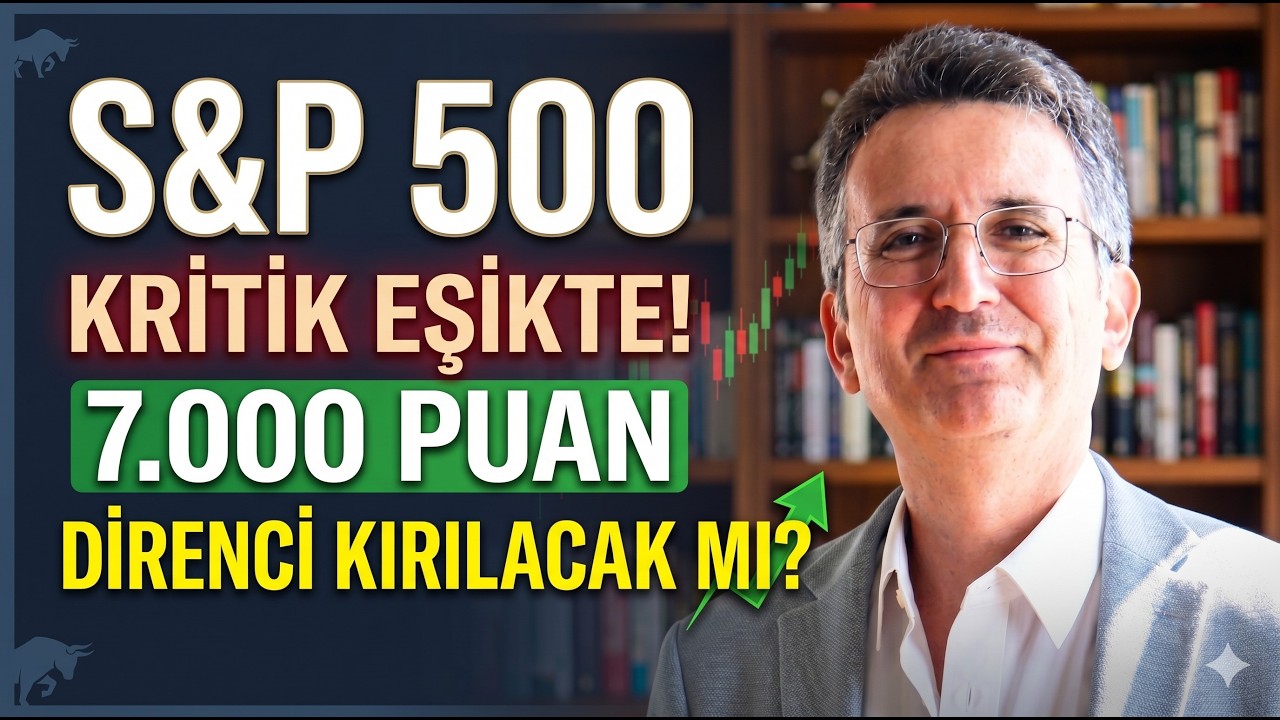
The Market's Moment of Truth at 7,000 Points
Markets are signaling something important. The S&P 500, a critical barometer for US market health, is making a determined push towards the 7,000-point psychological barrier. This isn't just another number on a chart; it's a litmus test for the conviction behind one of the most powerful bull markets in recent memory. While the ascent has been relentless, fueled by technological optimism and a surprisingly resilient economy, the question every investor is asking is what comes next. As the SPDR S&P 500 ETF (SPY) trades firmly at $699.94, a hair's breadth from this symbolic level, the tape doesn't lie—the upward momentum is undeniable. However, navigating this environment requires a sharp focus on the underlying drivers, from Federal Reserve policy to the subtle rotations happening beneath the surface.
Macro Winds: The Fed's Green Light for Risk-On
The macroeconomic backdrop has been a puzzle, but the market has decided how to solve it. Recent inflation data, including both the Consumer Price Index (CPI) and Producer Price Index (PPI), has shown pockets of stickiness. Ordinarily, this might spook investors into fearing a more hawkish Federal Reserve. Yet, the market's reaction has been telling. It has largely shrugged off these concerns, choosing instead to focus on the bigger picture: an economy that is expanding without overheating. This is the fabled "Goldilocks" scenario, where growth is just right, and inflation, while not fully vanquished, is not running away either.
The robust jobs market further complicates, yet supports, this narrative. Strong non-farm payroll numbers suggest underlying economic strength, providing a solid foundation for corporate earnings. This gives the Fed the ultimate flexibility. They are not being forced to cut rates to stave off a recession, nor are they being forced to hike aggressively to combat runaway inflation. This data-dependent holding pattern has become the market's comfort zone. The consensus has shifted from expecting imminent rate cuts to accepting a "higher for longer" reality, a testament to the economy's ability to absorb current borrowing costs. As long as growth continues, the market seems content to power ahead, viewing the Fed's steady hand as a stabilizing force rather than a headwind.
The Great Divergence: Tech Leads, Breadth Lags
A closer look at the major indices reveals a fascinating divergence that tells a story of concentrated strength. The tech-heavy Nasdaq, tracked by the Invesco QQQ Trust (QQQ), remains the undisputed leader, currently trading at $637.40, a gain of +1.40%. This performance is driven by the secular growth stories in artificial intelligence and semiconductors, which continue to attract a flood of capital. The broader market, represented by the SPY, is also showing impressive strength with a +0.79% gain. However, the story changes when we look elsewhere.
The Dow Jones Industrial Average, tracked by the SPDR Dow Jones Industrial Average ETF (DIA), is currently trading down at $484.72, a slight decline of -0.16%. This lag highlights the market's preference for high-growth tech over the more traditional, value-oriented companies that populate the Dow. More importantly, the Russell 2000, the benchmark for small-cap stocks, is showing modest signs of life. The iShares Russell 2000 ETF (IWM) is up +0.25% to $269.39. While positive, this muted performance relative to the Nasdaq suggests the rally has yet to fully broaden out to the entire market. For the bull market to have sustainable legs, participation needs to expand. Investors are keenly watching to see if capital begins to rotate from the high-flying leaders into these lagging segments, a sign that confidence in the economic expansion is becoming more widespread.
Sector Rotation: Following the Smart Money
Beneath the headline index moves, a crucial game of sector rotation is unfolding. Following the smart money means paying attention to where capital is flowing, and the signals are becoming clearer. Technology, particularly the semiconductor space, remains the engine of the market. The demand for processing power to fuel the AI revolution is a powerful, long-term theme that shows no signs of abating. It is the core holding for any growth-oriented portfolio right now.
However, the more interesting development is the emerging strength in cyclical sectors. Industrials and materials are beginning to perk up, a classic sign that investors are betting on a durable economic expansion. These are the sectors that build the economy—manufacturing, logistics, and raw materials. Their outperformance would confirm that the rally is not just a function of tech exuberance but is supported by fundamental economic activity. This is a critical development that could provide the next leg up for the broader market.
Energy also remains a key sector to watch. With geopolitical tensions simmering and global demand holding firm, energy prices can act as both an inflation driver and a portfolio hedge. Strength in this sector reflects a bet on global growth but also carries risks for the broader inflation outlook. A well-diversified portfolio should consider the crosscurrents, maintaining exposure to the secular growth of tech while strategically adding positions in cyclicals that stand to benefit from a broadening economic recovery.
🔒 Premium Section
The following analysis is available to Moonshot Premium members.
Portfolio Playbook: Positioning for the Next Move
- 🟢 Overweight: Technology, with a specific focus on the semiconductor industry. This remains the primary engine of market growth, and fighting this trend has been a losing proposition.
- 🟢 Increase Allocation: Industrials and Materials. Smart money is beginning to flow into these cyclical sectors, signaling a potential broadening of the rally based on real economic strength.
- 🔴 Underweight: Over-extended mega-cap names showing relative weakness. The key is not to abandon tech, but to be selective and rotate out of names where momentum appears to be stalling in favor of emerging leaders.
- 🔴 Neutral/Cautious: High-duration assets that are hyper-sensitive to interest rate fluctuations. While the Fed is on hold, the risk of inflation re-accelerating could introduce volatility. Maintain a balanced approach.
Closing Insight
The market is a discounting machine, and right now, it's attempting to price in a future of sustained growth and technological innovation. The 7,000 level for the S&P 500 is more than a target; it's a validation of the current bullish narrative. While risks of complacency and shallow market breadth are real, the primary trend remains powerfully upward. Follow the smart money, stay disciplined, and remember that the most rewarding opportunities often appear when the market is climbing a wall of worry. Keep these key levels and sector rotations in mind as you navigate the sessions ahead.