
The Final Frontier: Why Smart Money Is Targeting Space Now
A new space race is underway, but this time it's commercial. While the hype is high, a disciplined 'picks and shovels' strategy could unlock generational wealth, mirroring the early days of the internet.
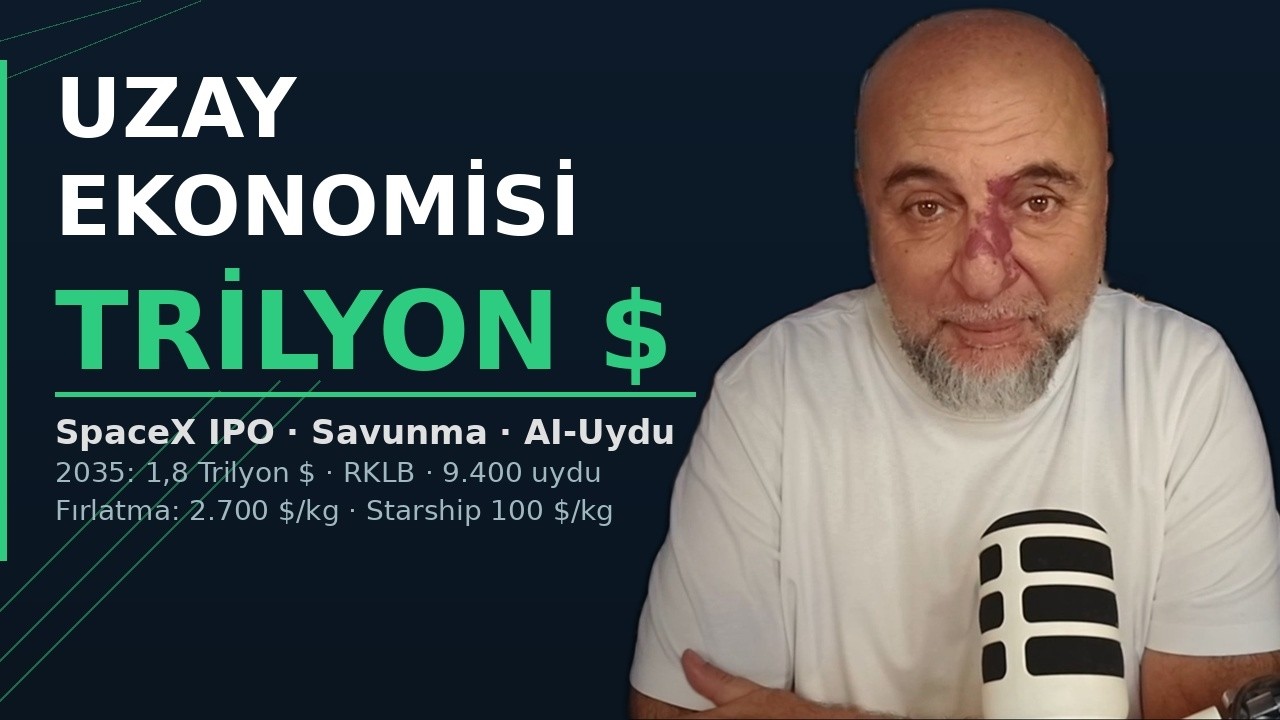
A New Era for the Space Economy
Earnings season often brings clarity, but the real alpha is found by looking beyond the next quarter. A seismic shift is occurring in an industry once dominated by governments, an industry now ripe for commercial disruption: the space economy. While the market digests daily news with the S&P 500 trading near 7,473.47 points and the VIX holding steady at 16.66 points, sophisticated investors are quietly positioning themselves for a multi-decade supercycle. The allure of space isn't just about exploration; it's about building the foundational infrastructure for the next wave of technological innovation. This isn't a speculative gamble on a distant future; it's a calculated investment in the tangible, revenue-generating companies building the highways to orbit. The parallels to the early internet are undeniable—amid the noise and volatility, future titans are being forged.
For decades, space was the exclusive domain of superpowers, a race for geopolitical prestige. Today, the driving force is economics. Visionaries like Elon Musk have fundamentally altered the cost equation of reaching orbit, transforming it from a prohibitively expensive venture into a viable commercial enterprise. This cost reduction is the single most important catalyst unlocking the entire space ecosystem. It allows for the deployment of vast satellite constellations, which in turn enable services from global high-speed internet to advanced Earth observation and data analytics. We are witnessing the birth of a new industrial revolution, and just like past revolutions, the most compelling initial opportunities lie not in the most glamorous applications, but in the essential tools and infrastructure that make everything else possible. This is where the smart money is focusing its attention.
The 'Picks and Shovels' Playbook for Orbit
In any gold rush, the most reliable fortunes are made not by the prospectors, but by those selling the picks, shovels, and Levi's. The same logic applies to the modern space race. The initial, and arguably most prudent, phase of investing in this sector is to focus on the infrastructure providers. These are the companies responsible for the foundational elements: building and launching the rockets, manufacturing the satellite components, and providing the ground support systems. They are the enablers of the entire industry, capturing revenue from a wide array of customers, from government agencies to commercial satellite operators. This strategy diversifies risk away from betting on a single application or service and instead provides exposure to the secular growth of the entire market. As launch activity increases, demand for these core services is virtually guaranteed to rise with it.
A prime example of this strategy in action is Rocket Lab (RKLB). The company has carved out a niche in the small-to-medium launch market, providing reliable and frequent access to orbit for a growing client base. But the story doesn't end with launch. Rocket Lab is intelligently vertically integrating, expanding into satellite components and spacecraft manufacturing. This transforms them from a simple taxi service to orbit into a comprehensive space solutions provider, capturing more of the value chain. While legacy aerospace giants like Boeing (BA), Lockheed Martin (LMT), and Northrop Grumman (NOC) remain formidable players with deep government contracts, they face significant margin pressure from more agile, cost-effective newcomers. The future belongs to those who can innovate on both technology and business models, and that's where the real opportunity for outsized returns lies.
Beyond Launch: Unlocking the Satellite Value Chain
Getting to space is just the first step; the real, long-term value will be created by the services and data generated from assets in orbit. This represents the second phase of the space investment thesis. Once the launch infrastructure is established and costs are sufficiently low, the focus shifts to the companies that own and operate satellite constellations. These businesses are not selling rockets; they are selling connectivity, data, and insights. This is a recurring revenue model that is far more scalable and potentially more profitable than the capital-intensive business of launch. Think of it as the difference between building a highway and operating a fleet of subscription-based services that use that highway.
A company like Viasat (VSAT) offers a clear window into this world. While its stock has faced challenges, its business model is a blueprint for the future of space-based services. Viasat provides satellite broadband services, most familiarly to consumers in the form of in-flight Wi-Fi on commercial airlines. This is a tangible, revenue-generating application of space technology that millions of people use every day. The company is essentially a data utility with assets in orbit. The key metrics for businesses like this are not rocket performance, but customer acquisition cost, average revenue per user (ARPU), and network capacity. While competition is fierce, the winners in this segment will build powerful, defensible moats based on network scale and technological superiority. As global demand for data continues its exponential climb, satellite communication networks are poised to become an indispensable part of our global infrastructure.
The SpaceX Factor and Lessons from the Dot-Com Era
It is impossible to discuss the modern space economy without acknowledging the monumental influence of SpaceX. Though still a private company and inaccessible to most public market investors, its actions serve as the primary catalyst for the entire industry. SpaceX's relentless focus on reusable rocket technology has single-handedly driven down the cost of launch by an order of magnitude, creating the economic conditions necessary for this commercial boom. Its Starlink satellite internet constellation is a proof-of-concept for space-based services at an unprecedented scale. For public market investors, SpaceX is the tide that lifts all boats. Its success validates the market, expands the total addressable market for everyone, and creates a robust ecosystem of suppliers and partners that are often publicly traded.
This entire dynamic feels incredibly reminiscent of the late 1990s internet boom. During that period, countless companies with flimsy business plans went bust, but foundational giants like Amazon, Google, and Cisco emerged from the ashes to define the next two decades of economic growth. We are likely to see a similar pattern in the space sector. There will be hype, volatility, and spectacular failures. The key for investors is to maintain discipline, focus on companies with clear paths to profitability, and avoid the purely speculative plays. The winning strategy is not to chase every shiny object, but to identify the future 'Cisco' of space—the company providing the essential, non-negotiable infrastructure. The guidance from these foundational companies will be key to navigating the inevitable market cycles. This is a long-term game, and patience will be rewarded.
🔒 Premium Section
The following analysis is available to Moonshot Premium members.
Portfolio Playbook: Positioning for the Final Frontier
🟢 Overweight: 'Picks and Shovels' Infrastructure. Focus on companies with proven launch technology, a strong manifest, and expanding footprints in satellite components and manufacturing. These are the toll-road operators of the space economy with the most direct path to revenue growth as the sector expands.
🟢 Strategic Allocation: Established Satellite Service Providers. Look for companies with existing satellite constellations, recurring revenue streams, and clear competitive advantages in high-demand niches like in-flight connectivity or secure government communications. Evaluate them like mature tech companies, focusing on cash flow and profitability.
🔴 Underweight: Speculative & Pre-Revenue Application Plays. Be extremely cautious with companies focused on far-future concepts like asteroid mining or space tourism that have no clear timeline to positive cash flow. While the upside is theoretically massive, the risk of failure is equally high. This is where capital goes to die during downturns.
🔴 Reduce Exposure: Legacy Aerospace Primes with Low Growth. While companies like Boeing and Lockheed Martin are stable, they are being disrupted by more agile players. Their growth profiles may not justify their valuations in a rapidly changing competitive landscape, and they face constant margin pressure.
Closing Insight
Investing in the space economy today is a bet on the inevitable march of technological progress. The barriers to entry have fallen, and a wave of innovation and capital is flooding into the sector. While the journey will be marked by volatility, the long-term trajectory is clear. By adopting a disciplined, phased approach that begins with the essential infrastructure, investors can position themselves on the right side of one of the most powerful secular growth trends of the 21st century. The expectations are set; now comes the execution.